

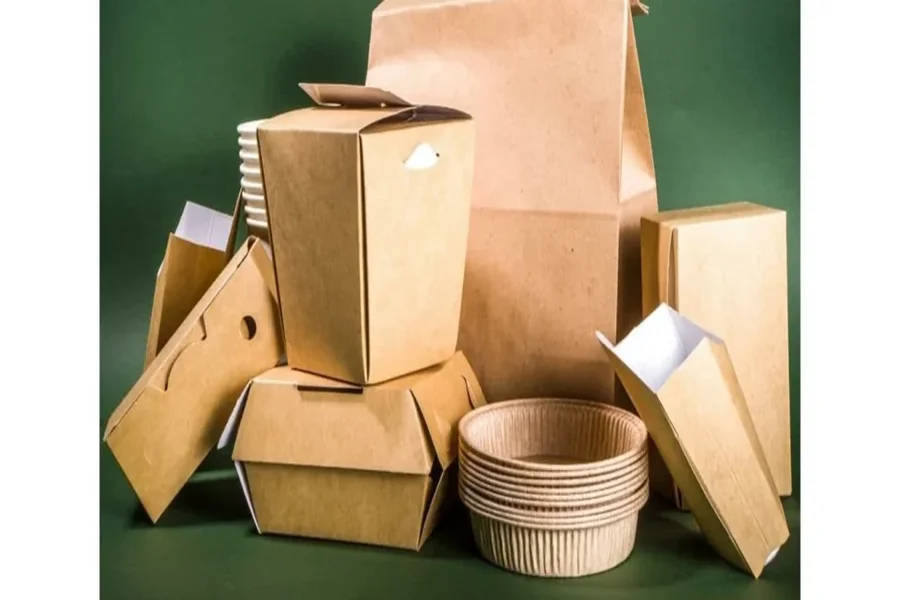
In the United Kingdom, the standards for the safety of cardboard boxes used for food delivery are designed to ensure that the packaging does not compromise the safety, quality or integrity of the food it contains. These standards are shaped by national regulations, as well as broader frameworks such as guidance from the Food Standards Agency and retained EU legislation on food contact materials.
Restaurants, cafés and individual food delivery outlets generally use recyclable food packaging. This is driven both by customer demand and by UK environmental regulations. To ensure that the cardboard boxes for food delivery are safe for customers to use, manufacturers must be confident that it complies with all aspects of the regulations:
- A central requirement is the safety and composition of the materials used. Cardboards used for food packaging must be made from materials that are safe to come into contact with food. This includes restrictions on substances such as heavy metals, inks, adhesives and coatings that could migrate into food. Manufacturers must ensure that all components comply with food contact material regulations and are suitable for their intended use, whether for hot, cold, dry or greasy foods.
- Hygiene and manufacturing practices. Cardboard food boxes must be produced in clean, controlled environments that minimise contamination risks. This includes the proper handling of raw materials and storage conditions, as well as quality control during production. Good manufacturing practices ensure that the packaging remains safe throughout its lifecycle.
- Structural integrity and functionality. Packaging must be robust enough to securely hold food in place without collapsing, leaking or breaking during transportation. This is particularly important for delivery services, where boxes may be stacked or subjected to movement. The design should also protect food from external contaminants, such as dust, moisture and physical contact.
- Temperature and moisture resistance. Cardboard boxes used for hot or greasy foods often have special linings or coatings to prevent absorption and maintain structural integrity. These features must comply with safety requirements to ensure that they do not release harmful substances when exposed to heat.
- Migration control. Standards regulate how substances from the packaging may transfer into the food. Migration limits are set to ensure that any transfer remains within safe levels and does not affect the taste, smell or composition of the food. Testing is often required to confirm that cardboard packaging performs safely under expected conditions, such as exposure to heat or moisture.
- Labeling and traceability. Packaging suppliers must be able to provide documentation confirming compliance with food safety standards. This includes information about the materials used, the results of any testing, and the intended use. Traceability enables the relevant authorities and businesses to swiftly identify and address any issues.
Finally, environmental and recycling considerations are increasingly being integrated into standards. While not directly related to food safety, regulations encourage the use of recyclable and responsibly sourced materials, provided they meet safety requirements.
